How to Prove Distracted Driving
- What Counts as Distracted Driving in Georgia?
- How Do You Prove the Other Driver Was Distracted?
- Evidence That Can Help Prove Distracted Driving
- Why Distracted Driving Can Be Hard to Prove
- What Should You Do After a Distracted Driving Accident?
- Can a Lawyer Help Obtain Phone Records or Video Footage?
- Talk to an Augusta Distracted Driving Accident Lawyer
- Frequently Asked Questions
Distracted driving is not always obvious after a crash. The other driver may deny texting, looking at GPS, eating, adjusting the radio, or taking their eyes off the road. You may know something felt off, but proving it usually takes more than suspicion.
That proof matters. According to the National Highway Traffic Safety Administration, 3,275 people were killed in distraction-affected crashes in 2023. Distracted driving continues to hurt families across the country, including here in Augusta, Richmond County, Columbia County, and throughout the Central Savannah River Area.
If you were injured in a crash and believe the other driver was distracted, evidence can make the difference. Phone records, witness statements, police reports, crash scene photos, dashcam footage, nearby surveillance video, and expert analysis may all help show what happened.
Before you try to handle the insurance company alone, talk to an Augusta distracted driving car accident lawyer who knows how to investigate distracted driving claims and preserve evidence before it disappears.
What Counts as Distracted Driving in Georgia?
Distracted driving means more than texting behind the wheel. It can include anything that takes a driver’s attention away from safely operating the vehicle.
Common forms of distracted driving include:
- Texting or talking on a cell phone
- Holding or supporting a phone while driving
- Using GPS or another electronic device
- Talking to passengers in the vehicle
- Eating or drinking
- Reading
- Putting on makeup or grooming
- Adjusting the radio or vehicle controls
- Looking at something outside the vehicle instead of the road
Georgia’s Hands-Free Law limits how drivers may use phones and electronic devices while operating a vehicle. Drivers cannot have a phone in their hand or touching their body while talking on the phone, and drivers generally cannot read, write, or send texts, emails, social media content, or other internet data while on the road.
That does not mean every distracted driving case is easy to prove. A driver may put the phone away before police arrive. A nearby camera may not save footage for long. Witnesses may leave the scene. This is why quick investigation matters.
How Do You Prove the Other Driver Was Distracted?
Proving distracted driving usually comes down to gathering the right evidence and connecting that evidence to the crash.
Sometimes the evidence is direct. A witness may have seen the other driver looking down at a phone. The driver may admit they were using GPS. A police officer may note distraction in the crash report.
Other times, the evidence is indirect. The other driver may have failed to brake, drifted out of their lane, rear-ended your vehicle, or caused a crash in a way that suggests they were not paying attention. In those cases, your lawyer may need to look deeper.
6 Ways to Prove Distracted Driving
1. Cell Phone Records
Cell phone records can be important in distracted driving cases, especially when texting, calling, or data use may have happened close to the time of the crash.
These records are not always easy to get. The other driver’s insurance company is unlikely to hand them over just because you ask. In many cases, an attorney may need to send a preservation letter and use the discovery process to seek relevant phone records, call logs, text activity, or other evidence.
The goal is not just to show that the driver owned a phone. The goal is to determine whether phone use may have contributed to the wreck.
2. Police Reports
If police respond to the crash, the officer will usually speak with the drivers, review the scene, and prepare a report. That report may include statements from the drivers, witness information, citations, diagrams, road conditions, and observations about what may have caused the collision.
A police report does not always tell the whole story, but it can be an important starting point.
If the other driver admitted to looking at a phone, using GPS, eating, or being distracted, that information may appear in the report. If the officer issued a citation related to distracted driving, that may also support your injury claim.
3. Witness Statements
Witnesses can make a major difference.
Someone in another vehicle may have seen the driver looking down. A pedestrian may have noticed the driver holding a phone. A passenger may have heard the driver admit what happened.
Witnesses are especially important because they are often independent. They do not have the same financial interest in the claim that the drivers or insurance companies may have.
The problem is that witnesses can be hard to track down later. Names, phone numbers, and statements should be gathered as soon as possible after the crash.
4. Photos and Videos From the Scene
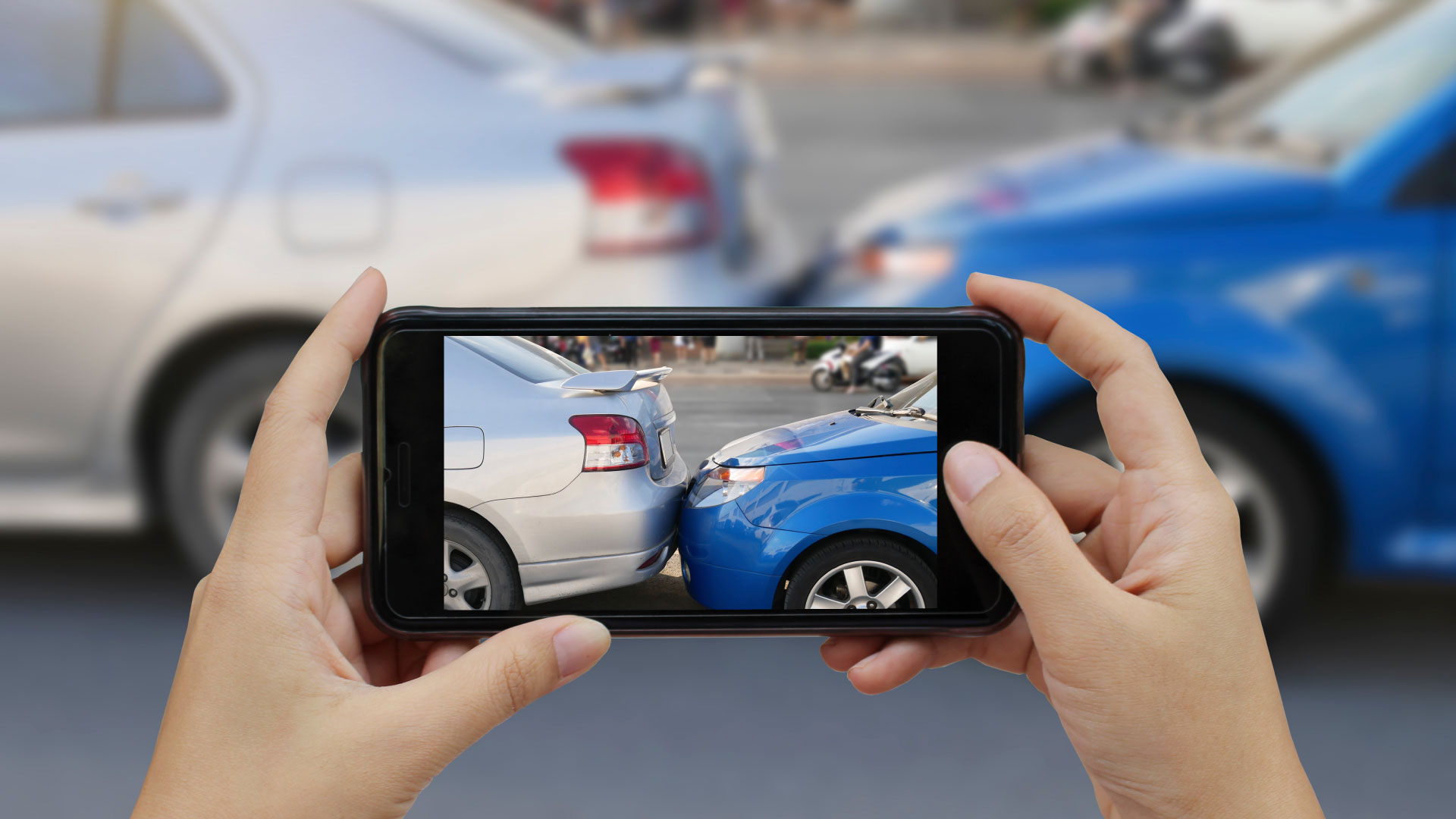
Photos and videos taken right after the crash can help preserve details that may disappear quickly.
Useful photos may include:
- Vehicle damage
- Final resting positions of the vehicles
- Skid marks or lack of skid marks
- Debris in the roadway
- Traffic signals and signs
- Weather and lighting conditions
- Open food containers
- Visible phone or electronic device
- Road layout and nearby businesses
A picture of a phone on the driver’s seat does not automatically prove distracted driving. But when combined with other evidence, it may help tell the story.
5. Dashcam, Traffic Camera, and Surveillance Footage
Video can be some of the strongest evidence in a distracted driving case.
Dashcam footage may show the other driver drifting, failing to brake, looking down, or holding a phone. Nearby businesses, homes, or traffic cameras may also capture the moments before the crash.
The challenge is timing. Many businesses do not keep surveillance footage for long. Some systems record over old footage within days. If no one asks for the video quickly, it may be gone.
That is one reason to contact a lawyer soon after a serious crash. An attorney can move quickly to identify possible cameras and request that footage be preserved.
6. Vehicle Data and Crash Reconstruction
Modern vehicles may contain data that helps explain what happened before impact. Depending on the vehicle and the severity of the collision, this information may include speed, braking, steering, and other crash-related details.
In serious injury cases, an accident reconstruction expert may also review the scene, vehicle damage, road conditions, and available data to explain how the crash happened.
This kind of expert testimony is not necessary in every case. It can be expensive, and it is more common in cases involving severe injuries, disputed liability, commercial vehicles, or fatal crashes. But when the facts are contested, expert analysis can be powerful.
Why Distracted Driving Can Be Hard to Prove
Drivers rarely say, “I caused this crash because I was texting.”
They may say they looked away for only a second. They may deny using the phone. They may blame traffic, weather, your driving, or something else entirely.
Insurance companies may also question whether distraction actually caused the crash. They may argue that even if the driver used a phone earlier, there is no proof that phone use caused the collision.
That is why the details matter. Timing matters. Witnesses matter. Video matters. The damage pattern matters. The police report matters. The sooner the evidence is preserved, the better chance you have of proving what really happened.
What Should You Do After a Distracted Driving Accident?
After a car accident, your first priority is safety and medical care. But if you are able, a few steps can help protect your injury claim.
Call 911 and report the crash. Get medical attention, even if your pain seems manageable at first. Take photos and videos of the vehicles, the road, your injuries, and anything that may show distraction. Get names and contact information for witnesses. Look around for nearby cameras at businesses, homes, intersections, or other vehicles.
Keep your comments at the scene simple. You do not need to accuse the other driver or argue about what happened. Let the evidence speak.
You should also be careful with the insurance company. Do not give a recorded statement, sign a broad medical authorization, or accept a quick settlement before you understand your injuries and your legal options.
Can a Lawyer Help Obtain Phone Records or Video Footage?
Yes. A lawyer can help identify, preserve, and request evidence that may be difficult for you to get on your own.
That may include sending preservation letters, requesting police reports, contacting witnesses, looking for nearby surveillance footage, reviewing medical records, communicating with insurance companies, and using the legal discovery process when a lawsuit becomes necessary.
This is not about making the case more complicated than it needs to be. It is about protecting the proof before it disappears.
Talk to an Augusta Distracted Driving Accident Lawyer
Car accidents caused by distracted driving are all too common in Georgia. Whether you were driving a car, riding a motorcycle, walking through a crosswalk, or simply stopped in traffic, one distracted driver can turn your life upside down in seconds.
If you believe the other driver was texting, using GPS, eating, talking on the phone, or otherwise distracted before the crash, M. Austin Jackson Injury Lawyers can help investigate what happened.
Our team represents injured people in Augusta, Evans, Grovetown, Martinez, North Augusta, Aiken, Richmond County, Columbia County, and throughout the CSRA. We can deal with the insurance company, help preserve key evidence, and explain your legal options in plain language.
Your first consultation is free. We work on a contingency fee basis, which means you do not owe attorney’s fees unless we recover compensation for you.
Frequently Asked Questions
How do you prove someone was texting while driving?
Texting while driving may be proven through phone records, witness statements, police reports, dashcam footage, nearby surveillance video, admissions by the driver, or accident reconstruction evidence. The right evidence depends on the facts of the crash.
Can phone records prove distracted driving?
Phone records may help show whether the driver was calling, texting, or using data around the time of the crash. They do not always prove the entire case by themselves, but they can be important when combined with other evidence.
Is eating while driving considered distracted driving?
It can be. Distracted driving includes activities that take a driver’s attention away from the road, hands off the wheel, or mind off the task of driving. Eating, drinking, grooming, reading, and adjusting controls can all create risk.
What if the police report does not say the driver was distracted?
You may still have a claim. Police reports are important, but they are not the only evidence. Witnesses, video footage, phone records, crash scene photos, vehicle damage, and expert analysis may still help prove distraction.
Can I sue a distracted driver in Georgia?
If a distracted driver caused your crash and injuries, you may be able to pursue compensation through an insurance claim or lawsuit. Compensation may include medical bills, lost income, pain and suffering, and other damages depending on your case.
How quickly should I contact a lawyer after a distracted driving accident?
As soon as you can. Some evidence, especially surveillance video and witness memories, can disappear quickly. Talking to a lawyer early can help protect your claim before important proof is lost.
M. Austin Jackson has more than a decade of experience helping his neighbors in Georgia and South Carolina receive justice and fair compensation after an injury. An Augusta native, Austin is honored to serve this wonderful community, and he prides himself on providing friendly, personal legal guidance for folks in the middle of a hard time.